The raw inputs · proof by paperwork
164 documents, exactly as a practice receives them
Twelve months of bank statements per entity, dividend and rental-agent statements, trust deeds, ASIC extracts, Div 7A loan agreements, PAYG summaries — plus the deliberate mess every real engagement carries. Nothing was pre-cleaned. Folders marked ! contain a trap the engine had to catch.
00-group/5
Group-level
- GroupEngagementLetter_FY2025
- TaxPlanningMeetingMinutes_2025-05-14
- SigningDependencyOrderNote
- Daniel_PostYearEnd_ChangeRequest_Email
- GroupMemberMap_STALE.xlsx
01-geoffrey/17
Individual · patriarch
- ConsultingInvoice_CoastalDev
- DividendStatement_MeridianInfra
- DividendStatement_HarbourBanking
- Loan_Geoffrey_to_OpCo_Agreement
- + 12 monthly bank statements
02-marian/16
Individual · rental + CGT
- RentalAgentStatement_Woonona
- RentalAgentStatement_Corrimal
- CGT_ShareParcel_ContractNote
- CGT_ShareParcel_CostBase_and_Gain
- + 12 monthly bank statements
03-daniel/14
Individual · PAYG
- PAYG_PaymentSummary_Daniel
- Note_MinorChildren_Div6AA
- + 12 monthly bank statements
04-priya/13
Individual · sole trader
- MYOB_SoleTrader_P&L_PARTIAL (9 mo)
- DepositSlip_Sundry_2024-09-17
- DepositSlip_Sundry_2024-12-09
- DepositSlip_Sundry_2025-02-21
- + 9 of 12 bank statements only
05-thomas/13
Individual · PAYG
- PAYG_PaymentSummary_Thomas
- + 12 monthly bank statements
06-opco-building-services/23
Operating company
- ASIC_CompanyExtract_OpCo
- TaxLoss_CarryForward_Summary_FY2024
- RentInvoice_toSMSF · Q1–Q4
- MgmtFeeInvoice_toTrust · Q1–Q4
- MYOB_GeneralLedger_INCOMPLETE.xlsx
- + 12 monthly bank statements
07-family-trust/19
Discretionary trust
- TrustDeed_CallenbrookFamilyTrust
- ASIC_CorporateTrustee_Extract
- FamilyTrustElection_Geoffrey
- DistributionResolution_Pre30June_2025
- Dividend ×3 · RentalAgent ×4 · LandTax ×4
- DepreciationSchedule_Property1_10yr_GAP
- + prior-year return & capital-loss c/f
08-bucket-investments/17
Bucket company
- ASIC_CompanyExtract_Bucket
- Div7A_ComplyingLoanAgreement_TrustToBucket
- UPE_Schedule_PARTIAL (prior-year)
- + 12 monthly cash-mgmt statements
09-smsf/27
Self-managed super fund
- SMSF_TrustDeed_Extract
- TrusteeDeclaration ×4 members
- DividendStatement ×2 · BrokerHoldings
- CommercialLease_SMSF_to_OpCo
- ContributionRecords (wrong-account $15k)
- + 12 statements + 5 prior-year member statements
The documents themselves
Eight of the 164, exactly as ingested — real letterheads, real figures, no lorem ipsum.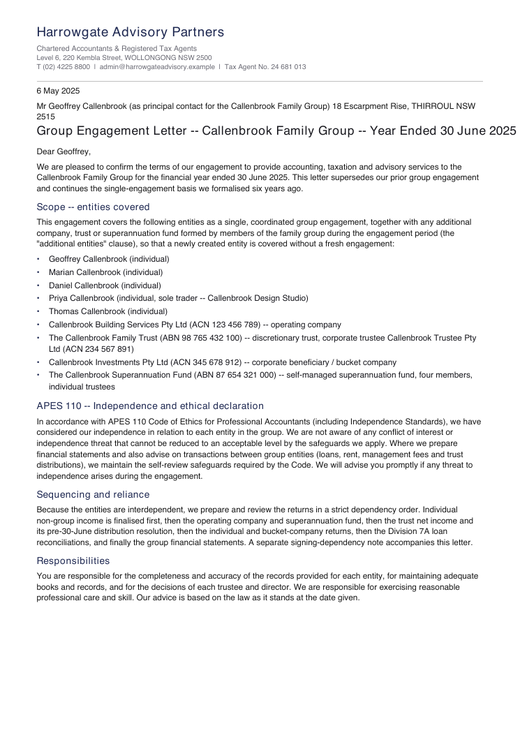
Group Engagement Letter
Family group · YE 30 Jun 2025
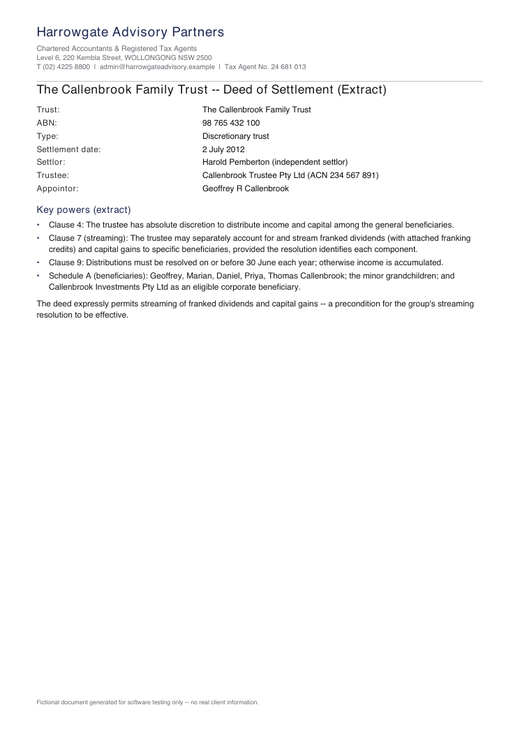
Trust Deed of Settlement
Corporate trustee · settled 2012
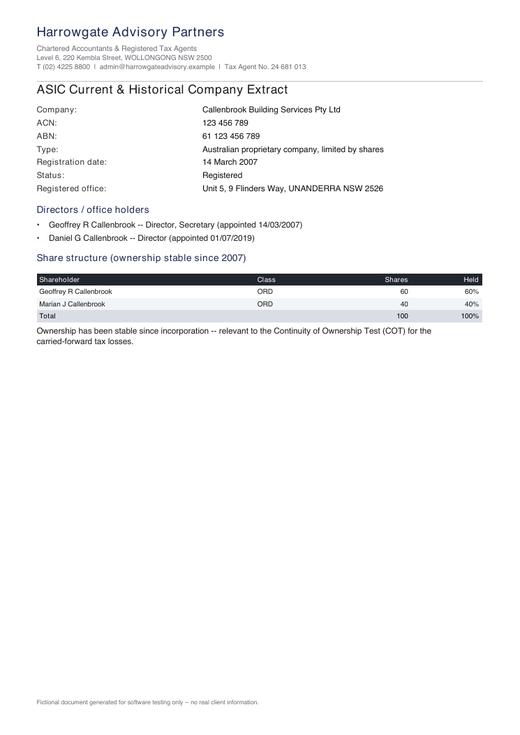
ASIC Company Extract
Op-co · registered 2007
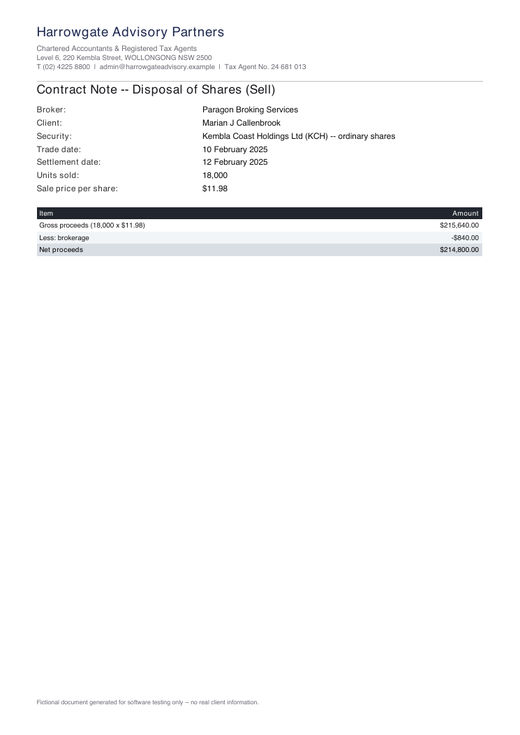
CGT Contract Note
Share disposal · proceeds $214,800
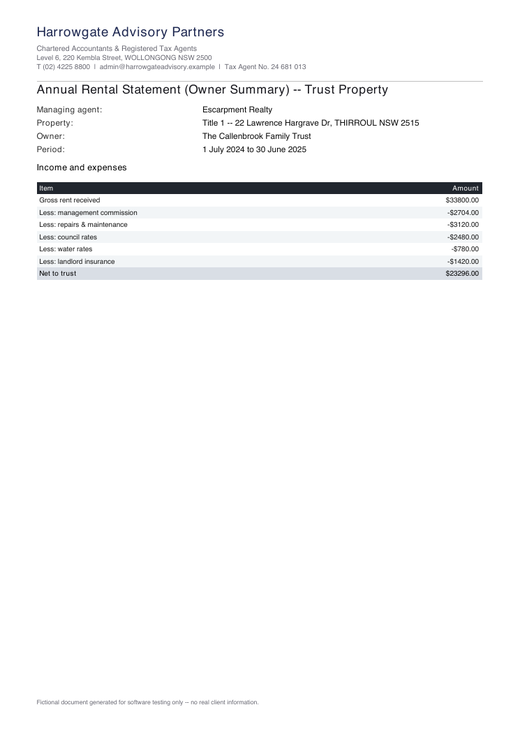
Rental Agent Statement
Trust property · net $23,296
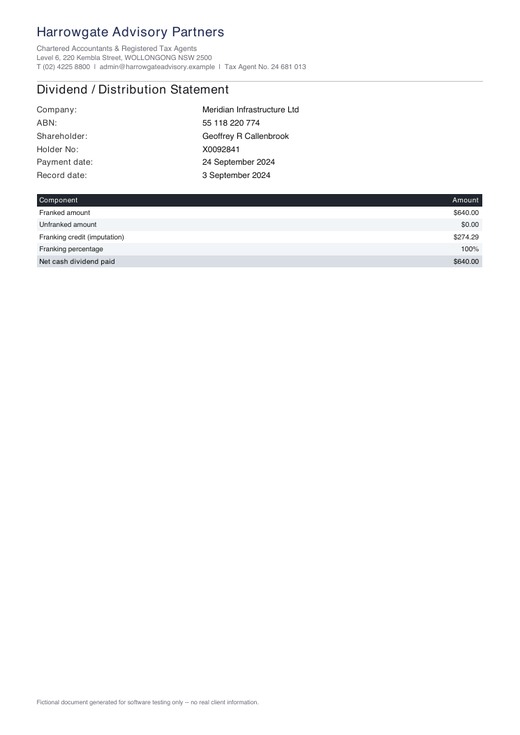
Dividend Statement
Franked · with imputation credit
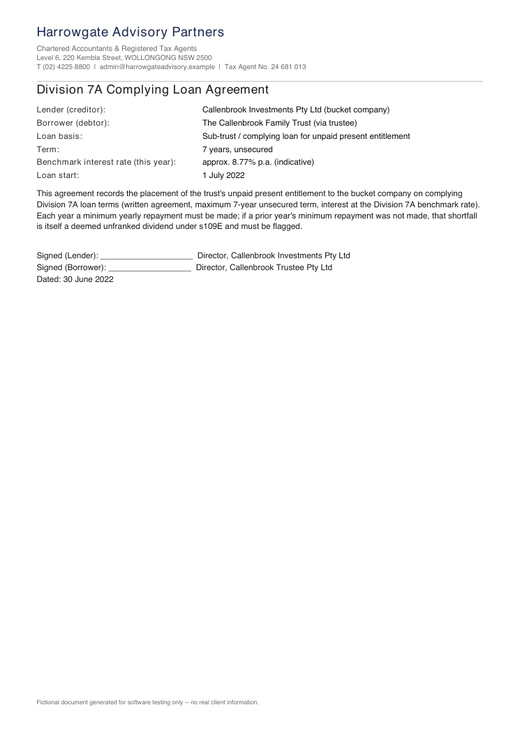
Div 7A Loan Agreement
Trust → bucket company
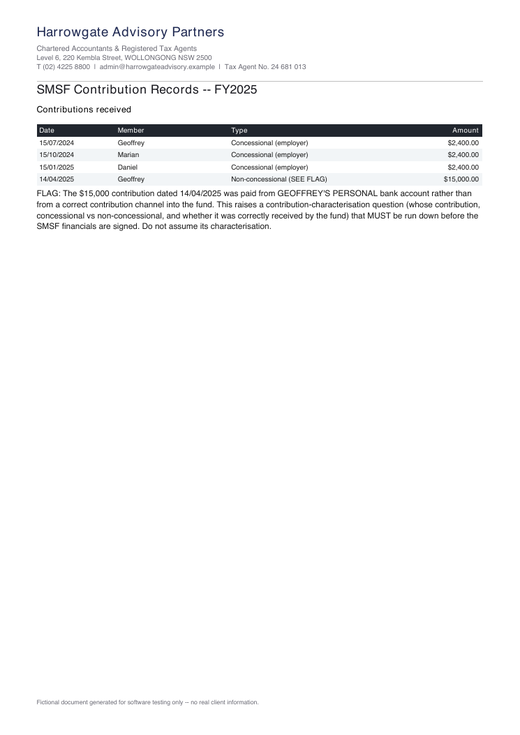
SMSF Contribution Records
Wrong-account $15,000 · caught